

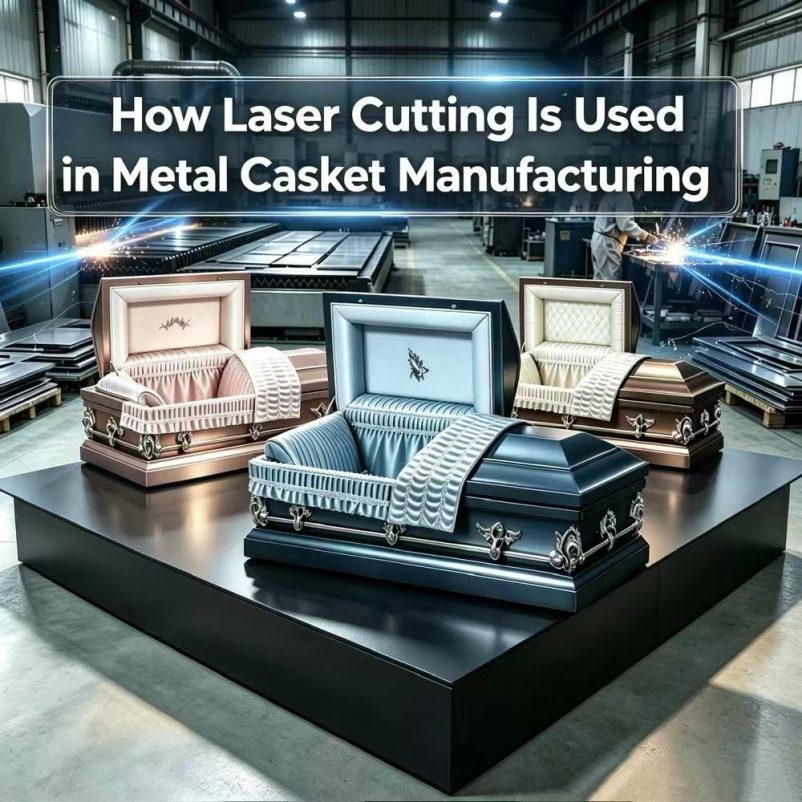
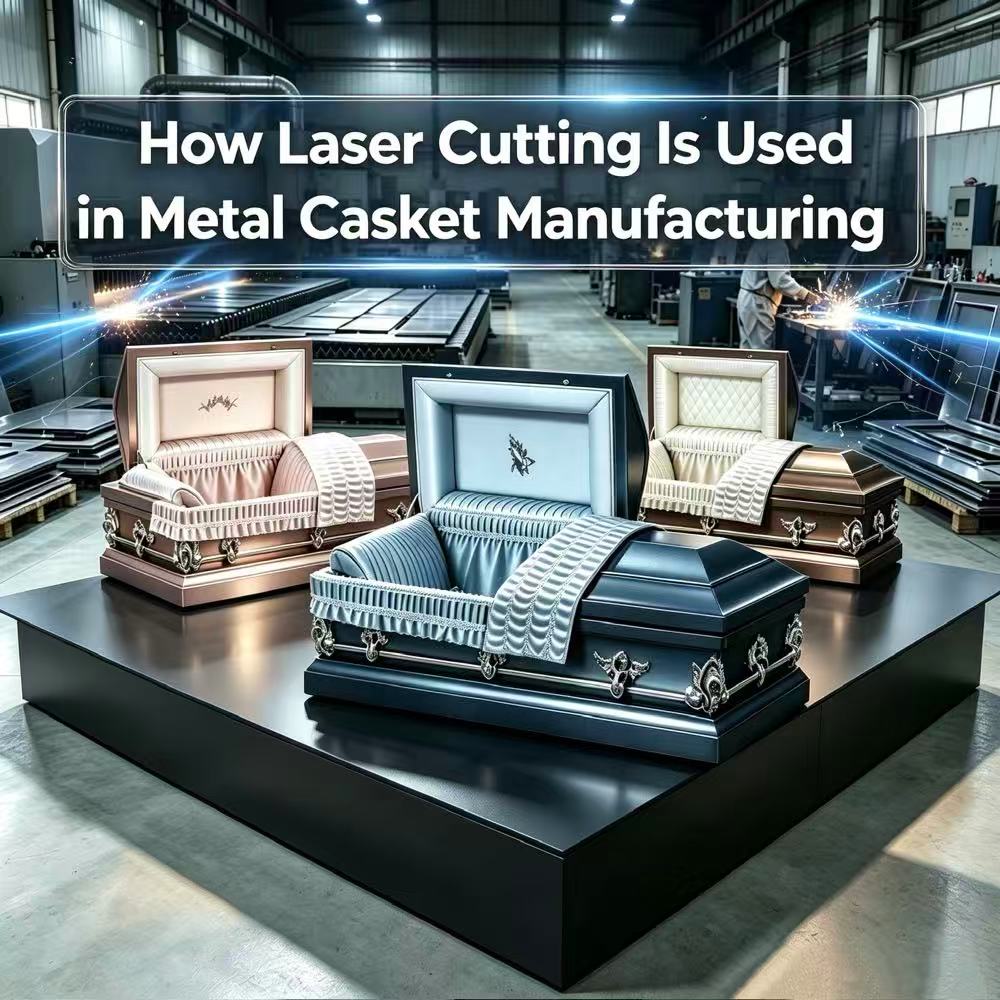
How Laser Cutting Is Used in Metal Casket Manufacturing
Metal casket production relies heavily on precise metal fabrication, and laser cutting has become a standard, reliable process for shaping metal panels and decorative components for caskets. Unlike traditional mechanical cutting tools, fiber laser cutters work with thin and medium-gauge steel, stainless steel, and galvanized metal sheets widely used in the metal casket industry.
Core Benefits for Casket Makers
1. Cutting accuracy
Laser cutting delivers tight dimensional tolerances, which is critical for casket assembly. Panels, lids, corner trims and framing parts need to fit together cleanly without gaps. This precision ensures consistent alignment when workers weld and assemble each casket unit. It avoids mismatched joints that would slow down assembly or affect the final finished look.
2. Repeatability for bulk & OEM orders
For distributors and private-label buyers placing large wholesale orders, repeatability is a key advantage. Once the CAD drawing for a casket component is finalized in the laser machine’s system, the cutter can reproduce the exact same shape hundreds or thousands of times. This keeps all units in one batch consistent, which is especially important for OEM and custom branded casket lines.
3. Ability to produce complex shapes
Simple rectangular panels can be cut with other tools, but laser cutting unlocks decorative detailing that defines many custom metal caskets. Ornate border patterns, engraved-style cutouts, custom panel outlines, shaped end caps and decorative overlay designs can all be programmed directly from digital files. This supports the customization requests that many funeral product buyers ask for, without expensive custom dies.
Note: Laser cutting is for profile cutting and cut-out patterns. It cannot replace separate bending, welding, polishing and finishing steps. Deep 3D sculpting is outside its scope.
4. Improved production efficiency
Compared with plasma cutting or manual die cutting, laser cutting shortens lead time for new styles. When a buyer approves a new custom casket design, the factory can upload the drawing and start cutting samples quickly, with no need to manufacture new tooling. For standard SKUs, continuous laser cutting also speeds up sheet processing, helping factories meet bulk order schedules.
Real factory workflow context
In a metal casket workshop, the laser cutting station is usually the first major fabrication step:
1. Raw metal sheets are loaded onto the laser cutting bed
2. Technicians upload approved CAD files for the casket parts
3. The laser cuts all required panels, trim pieces and decorative cutouts
4. Cut parts move to bending, welding, grinding, surface treatment and final assembly
Limitations (to keep content realistic, no overpromising)
It is important for buyers to understand what laser cutting cannot do:
• It does not eliminate secondary finishing work: cut edges may still require deburring
• Very thick metal plate is not ideal; most metal casket laser work uses thin to medium sheet metal
• It is a cutting process only. Surface paint, powder coating, interior lining and hardware fitting are separate downstream operations.
Wrap-up
For metal casket manufacturers serving wholesale and OEM customers, laser cutting is a foundational fabrication tool. It balances accuracy, consistent batch output, flexible custom shapes and faster sample development. When sourcing custom or private-label metal caskets, buyers can ask suppliers whether they operate in-house laser cutting equipment — this often translates to faster sampling and more reliable control over custom decorative parts.