

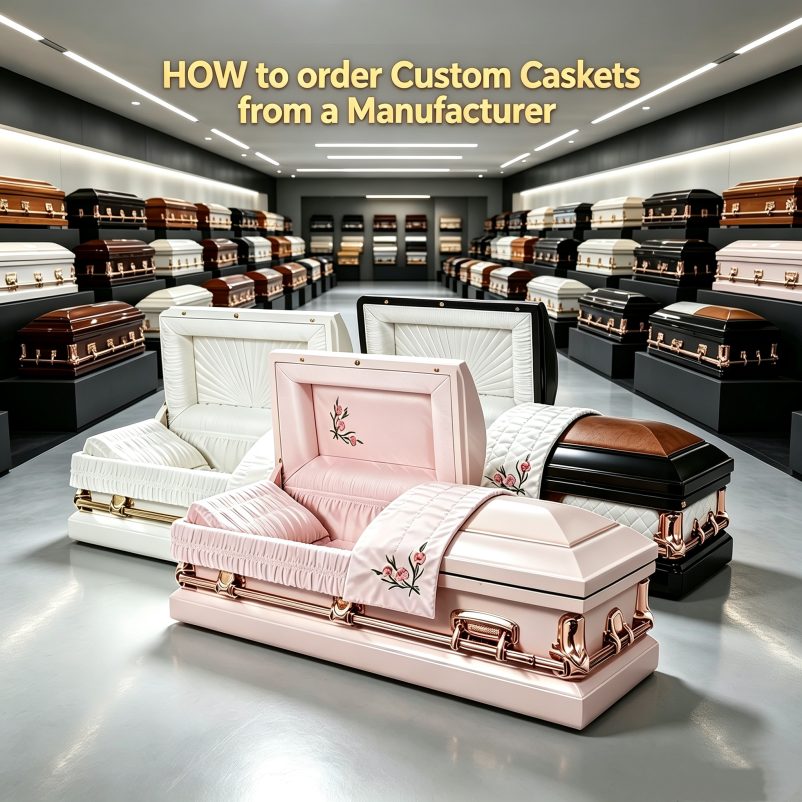
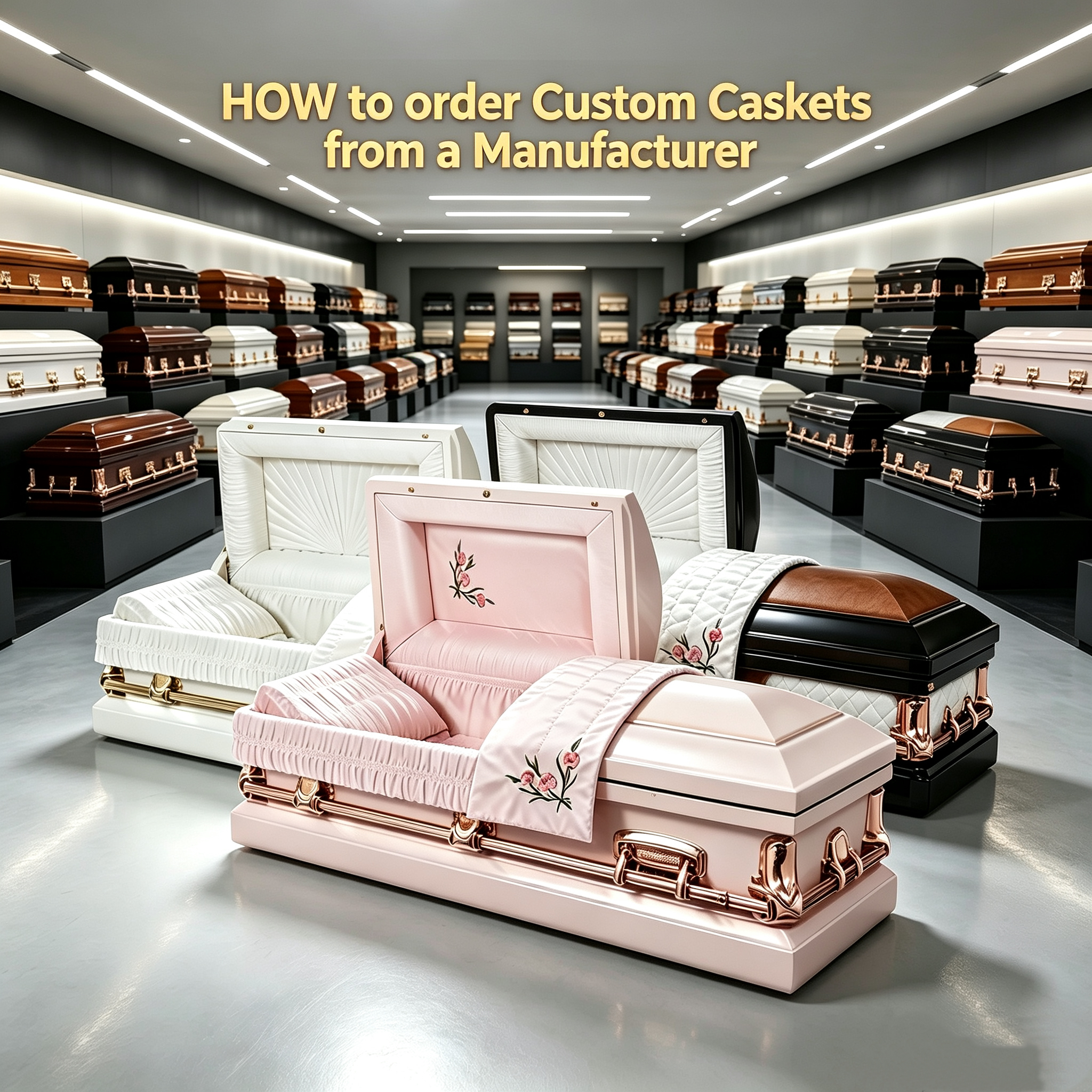
Ordering custom caskets directly from a manufacturer lets you match local market demands, brand requirements and special client requests. Unlike standard off-the-shelf models, custom orders follow a structured workflow. Clear preparation at each step avoids delays, rework and unexpected costs. Below is the complete OEM ordering process, plus what buyers need to prepare at every stage.
Full Custom Order Workflow: Requirement → Drawing → Material → Sample → Confirmation → Production → QC → Delivery
1. Define your custom requirements
This is your starting point. Be specific to prevent misunderstanding.
What buyers need to prepare:
• Target market & usage scenario (domestic retail, wholesale, export; burial or other use)
• Outer & inner dimensions, oversize requests if applicable
• Core custom items: material (304 / 316 stainless steel, copper, bronze, carbon steel), gauge, finish color
• Interior requirements: lining fabric, pillow, bedding style
• Hardware & decorative details: handles, corner ornaments, engraved panels
• Branding: logo position, engraving or printing format
• Order quantity, target lead time and budget range
Note: Some custom features carry extra tooling or mould charges. The factory will notify you after reviewing your requirements.
2. Technical drawing & design review
Once your requirements are collected, the factory engineering team turns the specs into production drawings.
What buyers need to prepare:
• Your own ready drawings (CAD / PDF) if you have them; include dimension tolerances
• Reference photos, sketches or sample pictures if you do not have formal drawings
• Notes for special construction: special curve, reinforced structure, unique panel layout
Key point: Check every dimension, material note and custom detail on the drawing carefully. Drawing approval is a critical checkpoint; changes after drawing confirmation usually cause extra cost and longer lead time.
3. Material & specification confirmation
After drawings are locked, confirm all material parameters.
What buyers need to confirm:
• Exact metal grade and gauge (thickness)
• Surface treatment: polished, brushed, painted, coated finish
• Interior fabric type, color and stitching style
• Hardware material and surface finish
Reminder: Gauge numbers do not equal fixed thickness across different metals. Always confirm the actual thickness value with the manufacturer in writing.
4. Sample development
A pre-production sample serves to verify appearance, craftsmanship, fit and finish before mass production.
What buyers need to know & prepare:
• Sample cost and sample lead time (tooling cost may apply for new unique designs)
• Sample shipping method and freight responsibility
• A checklist for you to inspect the sample: dimension accuracy, corrosion-resistant finish, welding quality, interior fitting, hardware function
You can list revision feedback clearly if adjustments are needed. Minor tweaks can be updated on the drawing for a revised sample, while major redesigns may restart the development cycle.
5. Final written confirmation
When the sample meets your expectation, sign off on the final specification pack.
This pack includes: approved drawing, material sheet, sample photos, unit price, MOQ, deposit terms, production schedule and inspection standards.
No big custom changes are accepted after this confirmation stage.
6. Mass production
Production starts after deposit received. The factory follows the signed-off drawing and sample standard.
You can request periodic progress photos or short videos if you need production updates.
7. In-process & pre-shipment QC
Quality checks run through production and before packing.
Typical inspection items:
• Dimension check
• Weld seam quality, surface scratch and blemish check
• Finish consistency
• Interior assembly
• Hardware installation and opening function
• Packaging integrity
You can arrange third-party inspection if your purchasing rule requires it.
8. Packaging & Delivery
After QC pass, goods go into export-grade packaging to avoid dent, scratch or rust during transit.
Confirm shipping terms: FOB, CIF or DDP, port of loading, destination port, document list (commercial invoice, packing list, certificate as required for import customs clearance).
Common FAQ for Custom Casket OEM Orders
Q1: Do I have to provide CAD drawings for custom caskets?
A: Not mandatory. Clear reference images + detailed dimension list work for many simple custom styles. Complex curved or engraved designs work best with formal CAD files.
Q2: Is there a minimum order quantity for custom designs?
A: MOQ varies by factory and whether new tooling is required. Simple modifications on existing models often support smaller orders; fully new custom designs usually have higher MOQ and mould cost.
Q3: Can I change the design after sample approval?
A: Small adjustments may be possible but may add cost and delay. Major design changes will be treated as a new custom project.
Q4: How long does the whole custom cycle take?
A: Sample development + approval normally takes 1–3 weeks; mass production lead time depends on quantity and customization complexity. Confirm the timeline before deposit.
Closing